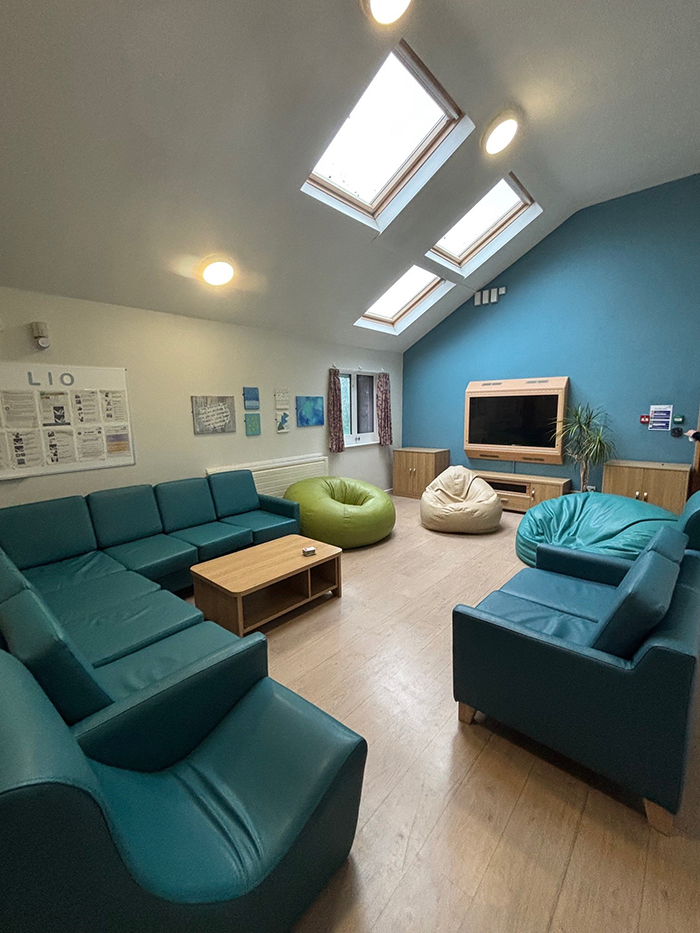

The regional services we commission support children and young people who need specialised mental health care. The care provided will be with the aim of helping them to achieve the best outcomes for them and their long-term health.
These services are for a small number of young people who are at the greatest risk of rapidly declining mental health, or from serious self-harm, and need intensive input.
We offer day and inpatient services, along with specific at home services as an alternative to admission for those with eating disorders, or those with severe learning
Inpatient admission
When young people are being admitted to our service they will come in to either a General Adolescent Unit (GAU) or a Psychiatric Intensive Care Unit (PICU). These units support young people with their mental health, but offer different levels of care, appropriate to the individual needs.
In addition to care and treatment, education is available to all young people during their admission, regardless of which unit you become an inpatient on.

Psychiatric Intensive Care Unit (PICU)
Meadow, our PICU, is a highly secure and closely monitored ward for young people who are in acute mental health crisis.
PICU is used when someone is at serious immediate risk—for example, of suicide, running away, or harming themselves or others.
The length of stay is usually short-term, just until the crisis is under control.
A team of mental health professionals including psychiatrists, nurses, psychologists and occupational therapists support recovery.
The unit has extra safety measures in place to protect the young person and others.
General Adolescent Unit (GAU)
Think of this as a specialist hospital ward for young people with serious mental health problems. They need intensive support but don’t require high security.
Highfield or Marlborough House are our GAU’s, suitable for those who are either recovering from a crisis (like after being in a PICU) or who have ongoing complex mental health issues.
Length of stay is often longer than a PICU unit, as patients work through their difficulties with help from a multi-disciplinary team including psychiatrists, nurses, therapists.
The environment is safe and supportive but not as restrictive as a PICU.
 Other services
For some young people, a secure mental health service will be appropriate for their individual care needs.
Whilst we do not host low or medium secure units for children and young people within our geographical footprint, we do have access to beds should the need require. Referrals to these units will be made based on an individual basis.
Low secure units provide a safe, structured hospital environment for young people with serious mental health difficulties who may be at higher risk of harming themselves or others.
These units are more secure than general adolescent wards, with enhanced safety measures such as locked doors and closer supervision, similar to a psychiatric intensive care unit (PICU), but are designed to offer longer stays when needed.
Young people may remain in a low secure unit for several months or more, receiving therapy, education, and support from a multidisciplinary team that includes psychiatrists, nurses, psychologists, therapists, teachers, and support staff.
The goal is to help young people stabilise, better understand their difficulties, and prepare for life in the community or a less secure setting.
Medium secure units provide care and treatment for young people who present the highest levels of risk, such as serious harmful behaviours or criminal offences linked to their mental health.
These units have enhanced security and more intensive supervision than low secure settings, ensuring the safety of both young people and staff.
Young people in MSUs often have multiple or complex needs, which may include conditions such as personality disorder, psychosis, and/or autism and learning disabilities. Stays are typically longer term, with a strong focus on rehabilitation, supporting young people to manage their mental health and behaviour, safely.
Care is delivered by a multidisciplinary team, including psychiatrists, nurses, psychologists, therapists, teachers, and support staff. This team works closely with families, schools, and, where appropriate, legal services to support recovery and plan for the young person’s future.